The Job You Are Actually Automating
The mistake most operators make when they evaluate a service robot is to picture it taking orders or interacting with guests. That is not the job, and framing it that way leads to disappointment.
The job is the run. It is the trip from the pass to table 14 with four plates. It is the walk from the kitchen to the third-floor corridor with a room service tray. It is the bus-back with a loaded bin. In a busy restaurant, a server can walk several miles in a shift, and a large share of that distance is spent carrying things rather than talking to anyone.
That distinction matters commercially. Nobody is short of hospitality staff because guests want fewer conversations. They are short because the physical work is hard, the hours are unsociable, and turnover is punishing. A robot that absorbs the carrying leaves the human part of the job intact, and the human part is the part guests actually value.
The reframe that works with a floor manager: this is not a replacement for a server. It is a runner who never calls in sick and never gets tired at 9pm, so your servers stay in their section.
The Runs That Suit a Robot
Some trips are almost purpose-built for automation. Look for these:
- Long, repetitive, low-decision routes. Kitchen to a far section, kitchen to a banquet room, service lift to a guest floor. The longer and duller the walk, the better the case.
- Bus-back and clearing runs. Heavy, unglamorous, and completely invisible to the guest experience. Often the single highest-value trip to automate and the one operators consider last.
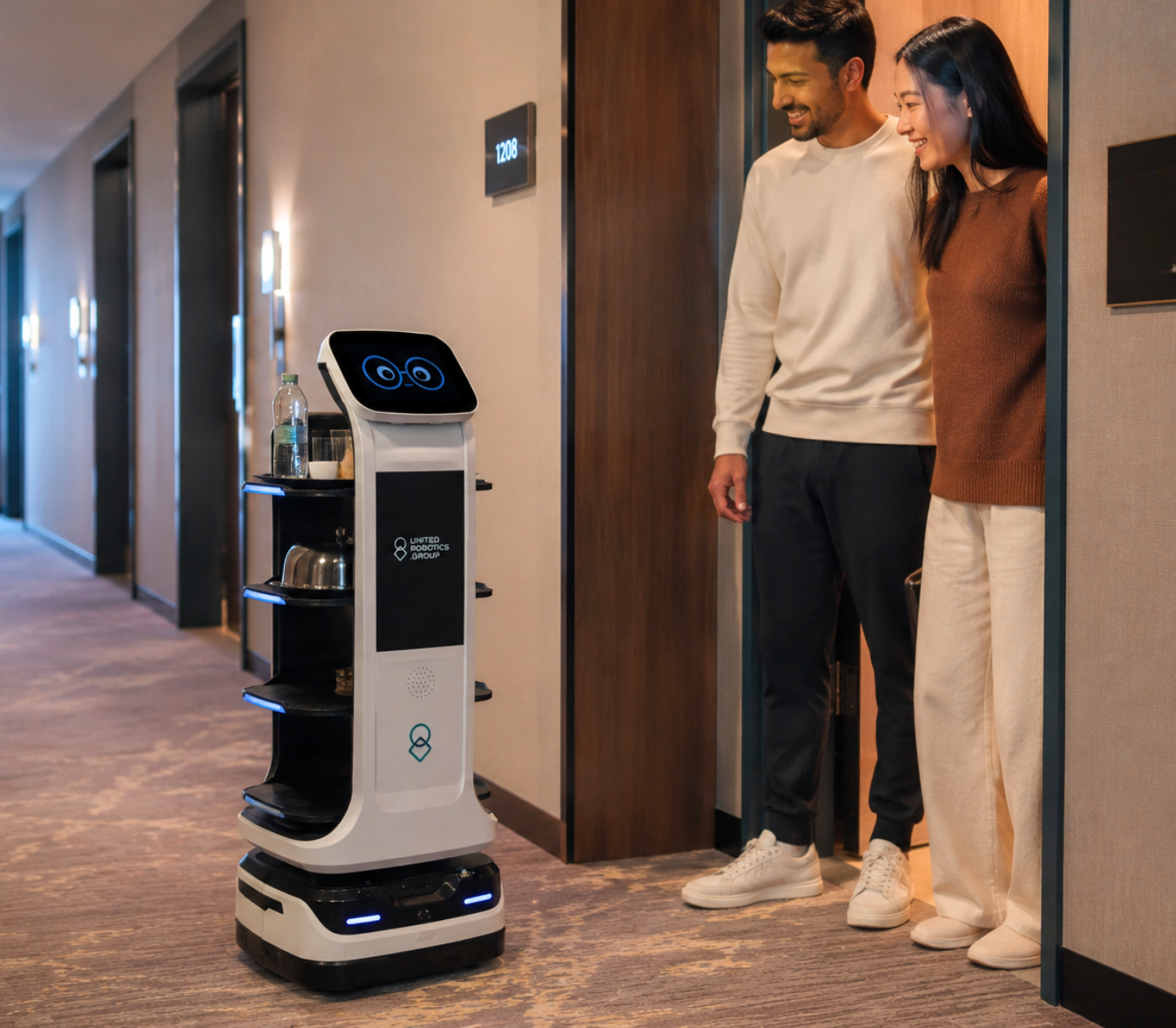
- Room service on long corridors. Hotels with extended floor plates spend real labour on distance. A robot handling the corridor leg while staff handle the door interaction splits the task sensibly.
- Banquet and event resupply. Predictable, high-volume, and concentrated in short windows where every pair of hands is stretched.
- Off-peak coverage. Late-night room service or a thin overnight shift, where the robot is not competing with a full team for floor space.
The common thread is distance without judgement. If the trip requires no decisions between origin and destination, it is a candidate.
The Runs That Do Not
We would rather tell an operator no than sell a deployment that disappoints. These situations rarely work:
Very short runs. If the pass is twelve feet from the section, a server will beat the robot every time and will resent being asked not to. There is a break-even distance and it is longer than people expect.
Tightly packed dining rooms at peak. A room where servers are already turning sideways to pass each other does not have the clearance for another body on the floor. This is the most common reason a pilot underperforms.
Anything requiring plating judgement. A robot carries what it is given. If the trip involves deciding what goes where, it is a human trip.
Fine dining service at the table. In rooms where the service ritual is part of what the guest is paying for, keep the robot in the back of house. It can still run the corridor to the service station.
Buildings with steps. Not a threshold or a small ramp, actual steps. This is a hard constraint, and no amount of enthusiasm changes it.
Layout, Traffic, and the Awkward Corners
Walk the route before you commit, at the hour it will actually run. A dining room at 3pm is a different building from the same room at 7:30pm.
Measure the tight points rather than the open ones. The aisle between the banquette and the service station is what determines feasibility, not the width of the main floor. Look specifically for pinch points where two people already pass with difficulty, chairs that get pushed out into the route, standing areas near a bar that fill unpredictably, and thresholds between flooring types.
Then plan the parking. A robot needs somewhere to live that is on power, out of the walkway, and close enough to the pass that staging it is not itself a chore. Charging locations chosen for convenience of installation rather than convenience of use are a reliable way to have the robot quietly stop being used.
In hotels, the elevator is usually the deciding factor. Whether the robot can call and ride the lift on its own, and how long it waits at peak, sets the practical throughput of every guest-floor route.
What Changes for the Team
Two things change, and only one of them is the one people expect.
The expected change is distance. Servers walk less, carry less, and finish shifts less depleted. In senior living dining rooms in particular, where the same staff are often care staff, that recovered energy goes straight back into residents.
The unexpected change is rhythm. A robot runs at a constant pace and does not read the room. A server judges when a table is ready and adjusts. Teams that adapt well learn to stage the robot slightly ahead of need rather than treating it as an on-demand runner, and the good deployments settle into that within a few weeks.
Expect a real adjustment period. The first fortnight involves people stepping around the machine and grumbling about it. The teams that come out the other side are the ones where a supervisor asked the floor staff which runs to automate rather than announcing which runs would be automated.
How Guests Actually React
More positively than most operators fear, and less permanently than most vendors promise.
The novelty is real and it is short. For the first few weeks guests photograph the robot, and that is genuinely useful for social reach. After that it becomes furniture, which is the correct outcome. A robot that is still remarkable in month six is probably getting in the way.
The reactions worth planning for are the quieter ones. Guests with mobility aids need the robot to yield predictably, and it should. Families with small children will treat it as an attraction, which is fine in a casual room and less fine in a corridor. And a small number of guests will ask, pointedly, whether it cost someone a job. Give your staff the honest answer in advance, because they will be the ones asked.
Our own view, and the one we ask operators to test rather than take on faith: run it in one room or one floor for a season, measure trips completed and distance saved, and ask the team at the end whether they would give it back. That last question is the only review that has ever predicted whether a second unit gets ordered.